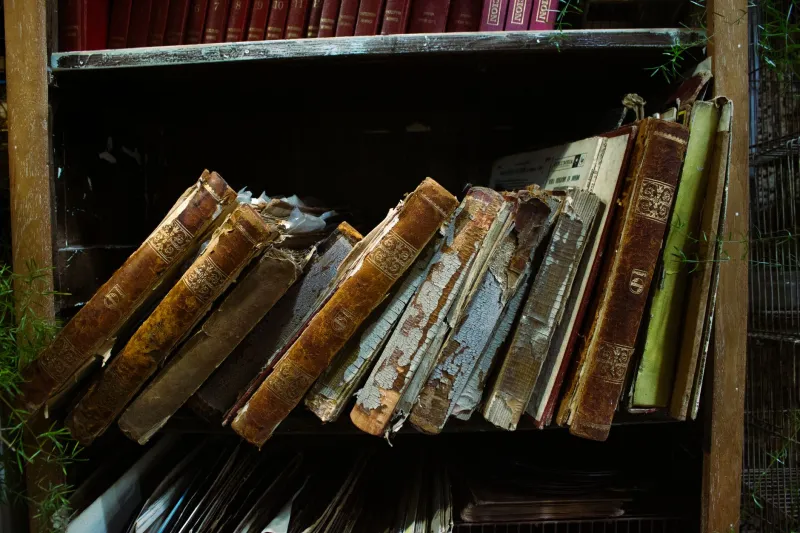
Why Certain Books Show Up Exactly When You Need Them Most

You know the feeling. You're in the middle of something hard — a breakup, a job loss, a quiet grief you haven't even named yet — and you pull a book off the shelf almost by accident. Maybe it's one you've owned for years and never cracked open. Maybe a friend pressed it into your hands at exactly the right moment. And then you start reading, and something shifts.
It's not just that the story is good. It's that the story seems to know something about you.
This is one of the stranger, more beautiful things that happens between readers and books. And it deserves more than a passing mention in a book club discussion.
The Intimacy You Didn't Know You Were Building
Most of us think about emotional connection in fiction as something that happens with characters. You root for them, you worry about them, you miss them when the book ends. That's real and it matters. But there's a quieter kind of connection that doesn't get talked about as much — the relationship a reader develops with the text itself.
Not the protagonist. Not the author. The book.
There's a reason certain novels get dog-eared and spine-cracked and carried around in bags for months. There's a reason some people can't bring themselves to lend out a particular copy even when they own three editions of it. That worn paperback isn't just a container for a story. It has become, in some genuinely felt sense, a companion.
Psychologists who study parasocial relationships — the one-sided emotional bonds we form with figures who don't know we exist — tend to focus on celebrities or fictional characters. But there's a strong case to be made that the phenomenon extends to books as objects, as experiences, as presences in our lives.
Why We Return to the Same Pages During Hard Times
Here's what's interesting: people don't usually reach for new books during a crisis. They reach for familiar ones.
There's a reason for that. When you're already overwhelmed, your cognitive bandwidth is limited. A new book demands orientation — new names, new worlds, new rules. But a book you've read before asks nothing from you. It just opens and holds you. The story already exists in your memory, which means you can drop into it at any depth without losing your footing.
But it goes beyond convenience. Returning to a specific book during a hard moment is often an intuitive act. Readers frequently describe reaching for the same novel during different crises — divorce, illness, loss — and finding something different in it each time. Not because the words changed, but because they changed. The book met them where they were.
That responsiveness is part of what makes certain books feel almost therapeutic. They don't give advice. They don't push back. They just reflect something true about the human experience back at you, and sometimes that reflection is the only thing you needed.
What Fiction Offers That People Sometimes Can't
This is the part that can feel uncomfortable to admit: sometimes a book is easier to turn to than a person.
That's not a criticism of human relationships. It's an acknowledgment that they come with their own weight. When you're struggling, talking to someone you love means managing their worry, translating your feelings into coherent sentences, and navigating the dynamic between you. Even with the best therapist, there's a performance element — you're presenting your experience to another consciousness.
A book doesn't need you to perform anything.
You can read through tears without explaining yourself. You can stop and stare at the ceiling for ten minutes and the book will wait. You can disagree with what it's saying or surrender to it completely, and it makes no demands either way. That unconditional availability is genuinely rare, and it's part of why fiction can reach into places that conversation sometimes can't.
Good novels — the kind that Ran Carr readers tend to gravitate toward — have a way of articulating the things you've been carrying without language. You read a sentence and think: that's it. That's exactly it. And there's something almost physical about that recognition. It's relief. It's being seen without having to explain yourself.
The Specific Books That Become Yours
Not every book does this. Most books, even excellent ones, stay in the category of experiences you had and remember fondly. But every serious reader has a small collection of titles that have crossed into something else — books that feel less like stories they read and more like places they've lived.
What makes a book cross that line?
Partly it's timing. Reading something at a moment of particular vulnerability or openness changes the way it lands. The same novel read at twenty-two and forty-five can feel like completely different books — not because the text is different, but because you are. The book that becomes yours is often the one that found you at exactly the right moment of readiness.
Partly it's specificity. Books that deal in precise emotional detail — the exact texture of loneliness, the specific way grief makes you forget words, the particular relief of being understood — tend to create stronger bonds than books that deal in broader strokes. When a writer gets something right, you feel it in your body before you process it in your mind.
And partly it's something harder to define: a quality of generosity in the writing. Some books feel like they were written with the reader in mind — not in a pandering way, but in the way that a good conversation partner holds space for you. Those books tend to be the ones people return to.
Reading as a Form of Care
There's something worth sitting with in all of this. We live in a culture that prizes efficiency and productivity, where taking three hours to read feels like it needs to be justified. But if a book can genuinely lower your cortisol levels, help you process an emotion you couldn't name, or simply make you feel less alone at two in the morning — that's not a small thing.
That's care. Self-administered, available on demand, and deeply personal.
The books that love you back aren't magic. They're the result of a writer putting something true on the page and a reader arriving at exactly the right time to receive it. The alchemy happens in the space between the two — and it's one of the best arguments for why reading fiction isn't escapism.
It's one of the more honest ways we have of meeting ourselves.