The Question That Ends Book Club Small Talk: How to Get People Arguing (In a Good Way)
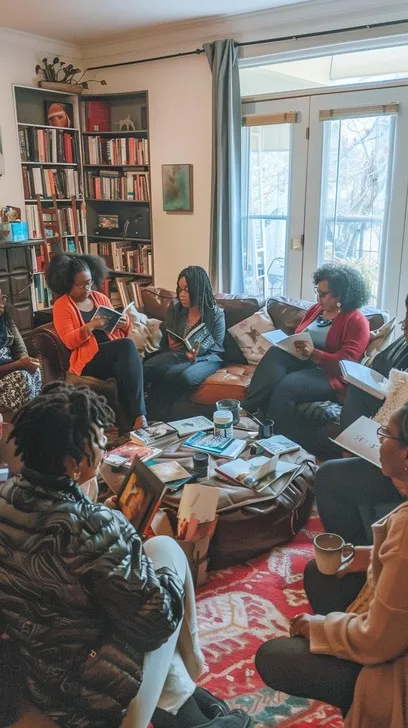
Photo: friends debating books at book club meeting living room, via images.stockcake.com
Every book club has a moment it's quietly avoiding. Someone says the book was "interesting," someone else agrees, and then everyone spends forty minutes on snacks, someone's kitchen renovation, and whether the new library branch has good parking.
The problem isn't your members. It's your questions.
"Did Everyone Like It?" Is a Question With No Destination
Yes-or-no questions about enjoyment produce yes-or-no answers. Ask "Did you like it?" and you'll get polite nods, a couple of shrugs, and a conversation that never leaves the runway.
The clubs that crackle with energy have figured out something simple: good discussion questions are built on fault lines. They're designed so that reasonable people land on opposite sides — and once two reasonable people disagree out loud, everyone else picks a side, and now you've got a conversation.
The trick is engineering that disagreement on purpose.
The Four Question Types That Actually Work
1. The Forced Choice. Instead of "What did you think of the protagonist?" try: "Was she selfish, or was she the only honest person in the room?" You can't answer "both" and get away with it. Someone will try. Make them pick.
2. The Recast. Ask members to defend the character they liked least. "Make the case for why he did the right thing." It's remarkable how quickly people's moral certainty dissolves when they have to argue the other side — and how revealing it is when they can't.
3. The Counterfactual. "If she'd told the truth in chapter four, would the ending still have happened?" Counterfactuals expose what people believe about fate, character, and whether people can really change — which is the actual subject of most contemporary fiction anyway.
4. The Confession. "Which character's choice made you squirm because you've made something like it yourself?" This one requires trust, so save it for the second half of the meeting. But when it lands, it's the moment people stop reviewing the book and start talking about their lives.
Novels Built to Split a Room
Some books are debate insurance. If your group has gone quiet, bring one of these and watch the fault lines open up.
Contemporary fiction is full of unreliable narrators and morally ambiguous choices precisely because they generate this kind of friction. A novel where the protagonist does something genuinely unforgivable — but for understandable reasons — is a machine for producing disagreement. The question "Would you have done the same thing?" is a trap, and everyone knows it, and everyone answers anyway.
Look for books with endings that refuse to resolve cleanly. A novel that hands you a verdict is a lecture. A novel that hands you a dilemma is a meeting agenda.
Ground Rules Worth Stealing
A few norms keep passionate debate from turning into a hostage situation:
- Text or it didn't happen. Disagreements get settled by pointing to the page, not by who talks loudest.
- No verdicts on people. We're judging characters, not members.
- The devil's advocate gets a pass. Someone arguing a position they don't hold is a feature, not a problem.
- Silence counts. Give people ten full seconds after a big question. The best answers come from the person who needed a moment.
The Real Goal Isn't Agreement
Here's the thing about a book club that argues well: nobody leaves angry. They leave thinking. The argument about whether a character was brave or reckless follows people to the grocery store, into the carpool line, onto the group chat.
That's the whole point. A book that everyone politely enjoyed is forgettable. A book that split your club down the middle is the one people bring up three years later.
So next meeting, skip the "thoughts?" and open with a forced choice. Watch what happens.