Your Unread Shelf Is a Portrait of Who You're Trying to Become
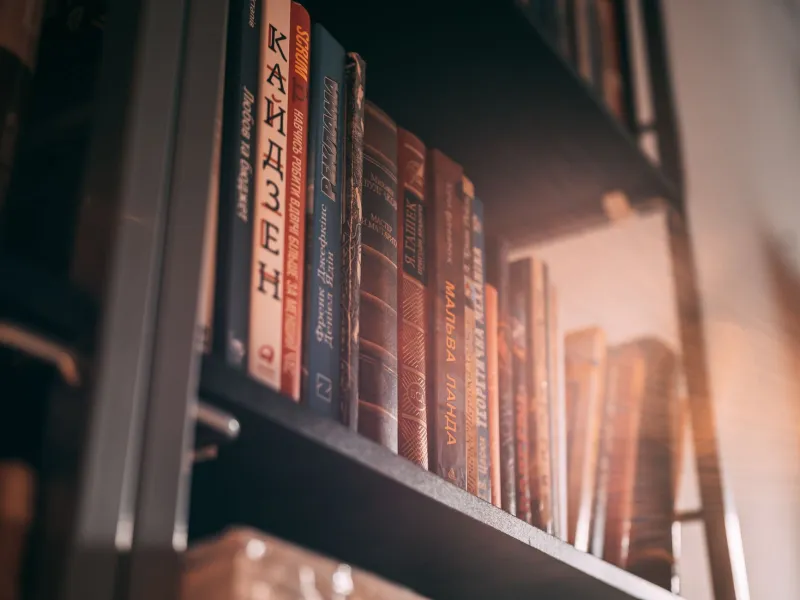
There's a specific kind of guilt that lives on bookshelves. You know the one. It's the guilt of the pristine spine, the uncracked cover, the bookmark that's never moved past page one. Maybe you bought it at an airport with grand intentions, or impulse-grabbed it after a glowing review, or added it to your cart at 11 p.m. when you were feeling ambitious. And then — life happened. The book sat there.
Here's a thought that might actually make you feel better about all of it: that unread shelf might be the most honest version of yourself you've ever assembled.
The Psychology of Buying Books You'll Never Read
There's actually a Japanese word for this — tsundoku — the practice of acquiring books and letting them pile up unread. And while it sounds like a quirk, it's really a window into something deeply human. We don't buy books at random. We buy them because something in us responds to the idea of what's inside.
When you pick up a dense biography of a historical figure you've always been curious about, you're not just buying a book. You're buying a version of yourself who has the time, the focus, and the intellectual appetite to absorb it. When you grab that literary novel everyone's been talking about, you're making a quiet claim: I'm the kind of person who reads this stuff.
Psychologists call this a form of identity-based aspiration. We use objects — including books — to signal who we want to be, both to the world and to ourselves. The shelf isn't a failure pile. It's a vision board with better cover design.
The Gap Between Who We Are and Who We're Reaching For
Here's where it gets genuinely interesting, especially for anyone who loves fiction. The books we intend to read often tell a cleaner story about our inner lives than the books we actually finish.
Think about your own shelf for a second. Is there a pattern? Maybe you keep buying books about reinvention — career pivots, second acts, starting over in your forties. Maybe you gravitate toward stories set in places you've never been. Maybe every other book is about a woman who finally stops apologizing for taking up space. That's not random. That's a recurring theme in the novel of your own life, showing up in the books you reach for even when you don't have the bandwidth to read them.
Ran Carr's work often explores exactly this kind of tension — the distance between the life a character is living and the life they're quietly aching for. That gap is where most of the drama lives, in fiction and in real life. Your TBR pile is basically that gap made physical.
When Intention Is the Point
Here's a slightly provocative idea: maybe some books aren't meant to be read cover to cover by you, right now. Maybe their job is to sit on your shelf and remind you of something you value, something you haven't lost sight of even if you haven't had time to pursue it.
That unread copy of a Pulitzer Prize winner isn't mocking you. It's a placeholder. It says: I still believe in serious literature. I still want to be challenged. I haven't given up on the version of me who has time for this.
There's real psychological comfort in that, and it's not entirely delusional. Studies on goal pursuit suggest that simply having a goal — even without actively working toward it — keeps that goal active in your mind and influences your behavior in small ways. The book on your shelf is a low-key commitment device.
The Books That Reveal the Most Uncomfortable Truths
Not all unread books are aspirational in a warm, fuzzy way. Some of them are avoidance in disguise.
The self-help book about processing grief that you bought two years ago and still haven't opened. The memoir about addiction that a friend recommended when you were going through something you haven't fully named yet. The novel about a difficult family dynamic that hits a little too close to home. These books sit on shelves not because you don't have time, but because you're not quite ready.
And that's okay. Books wait. That's one of the genuinely magical things about them — unlike a podcast episode or a streaming show, a book doesn't expire. It holds its space patiently until you're the version of yourself who can actually receive what it's offering.
If you've been circling a particular book for months, picking it up and putting it down, that hesitation is worth paying attention to. It's not about the book. It's about what the book might ask of you.
What to Do With All of This
None of this is an argument for never reading your unread books. Eventually, you probably should crack some of those spines — not out of guilt, but because the version of you that bought them was onto something.
But the next time you feel that familiar twinge of shame standing in front of your shelf, try reframing it. Instead of seeing a pile of unfinished ambitions, see a running record of your curiosity. A document of the things you've cared about, the questions you've carried, the person you've been slowly trying to build.
Every book you bought and haven't read yet is a conversation you're planning to have with yourself. The shelf isn't behind schedule. It's just waiting for the right moment — which, if you know anything about good fiction, is exactly how the best stories work.