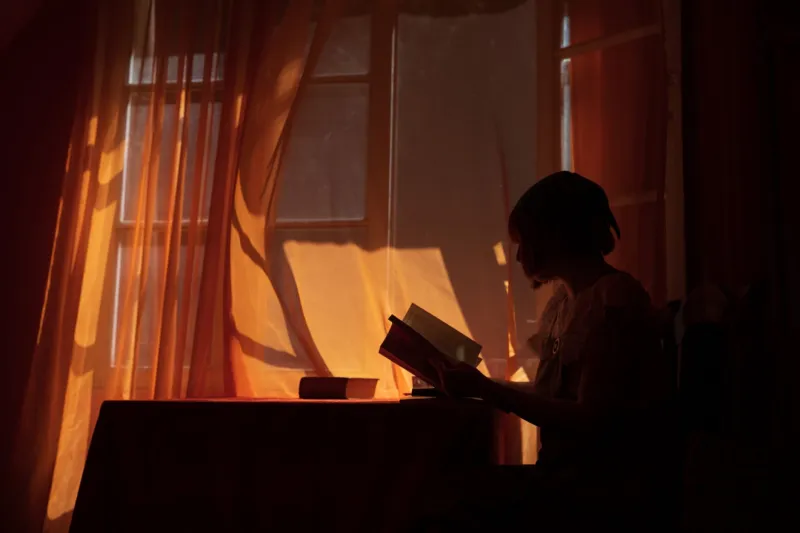
When a Book You Loved Stops Loving You Back — And Why That's Worth Celebrating

The Shelf That Time Forgot
Most of us have one. A shelf — physical or mental — where certain books sit like old trophies, gathering dust but holding enormous sentimental weight. The novel that cracked you open at twenty-two. The story that felt like it was written specifically for you during that weird, electric stretch of your mid-twenties when everything felt possible and nothing felt permanent.
And then one day, maybe in your forties, you pick it up again. Maybe you're recommending it to someone younger, or moving apartments, or just feeling nostalgic. You read the first chapter. Then the second. And somewhere around page fifty, a slow, uncomfortable realization settles in: this book doesn't feel the way it used to.
Worse — parts of it feel wrong.
Welcome to one of the stranger, more underrated experiences in a reader's life. And here's the thing nobody tells you upfront: it's actually great news.
What Felt Profound Then Might Feel Thin Now
Think about the kind of books that tend to hit hardest in your twenties. They're often bold, declarative, a little self-serious. They traffic in big ideas delivered with total confidence. They frequently center protagonists who are misunderstood, special, smarter than the people around them — protagonists who resonate deeply when you yourself feel misunderstood, special, and smarter than the people around you.
Contemporary fiction has no shortage of these. Novels built around a singular, charismatic worldview — the kind of book that feels like a manifesto when you're twenty-five and a little reductive when you're forty-five. The writing might still be sharp. The sentences might still sing. But the philosophy underneath? It no longer holds the same water.
That's not the book's fault, and it's not yours either. It's just what happens when a reader actually evolves.
The Subtle Shift in What We Ask of Fiction
Here's something worth sitting with: the questions we bring to books change dramatically over a lifetime. At twenty-five, many readers are asking Who am I? and Where do I fit? Fiction that answers those questions with force and clarity feels revelatory. It gives shape to the shapeless.
By forty-five, the questions tend to get quieter and more complicated. Why do people hurt each other? How do I hold space for someone I don't understand? What do I actually owe the people I love? Fiction that once felt like a mirror starts to feel like a caricature — too clean, too certain, too comfortable with its own conclusions.
This is the shift that explains why a book you evangelized at twenty-five can feel almost embarrassing to revisit. You're not the same reader. You're not asking the same questions. And the book, frozen in its original form, can only give the same answers it always gave.
When 'Problematic' Is the Wrong Word
There's a tendency in contemporary reading culture to reach for the word problematic whenever a beloved book fails to hold up under scrutiny. And sometimes that label is earned — fiction that relies on harmful stereotypes, that flattens marginalized characters into props, that mistakes cruelty for depth. Those are real issues worth naming.
But not every book that disappoints your older self is problematic. Some books are simply limited — written from a narrow vantage point that felt universal when you were inside it and feels constrained once you've lived outside it. There's a meaningful difference between a book that causes harm and a book that no longer reflects who you are.
Learning to make that distinction is part of becoming a more sophisticated reader. It lets you hold two things at once: appreciation for what a book gave you then, and honesty about what it can't give you now.
Honoring Your Past Self Without Getting Stuck There
Here's where readers sometimes stumble. The discomfort of a beloved book's limitations can trigger something defensive — a need to either fully reject the book (and by extension, the person you were when you loved it) or to double down on the original experience and dismiss the discomfort entirely.
Both moves miss the point.
Your twenty-five-year-old self needed that book. It did something real for you. It helped you build a version of yourself that was capable of eventually outgrowing it. That's not a small thing. That's actually how growth works — you use the tools available to you until you need better tools, and then you find them.
The healthier move is to let the book be what it was without demanding it be what it isn't. You can love the memory of reading it while acknowledging that it no longer fits. You can recommend it to someone younger with an honest caveat: This meant everything to me at a certain point. It might not land the same way for everyone.
That kind of nuance — holding affection and critique simultaneously — is itself a sign of the growth the book helped spark.
What Contemporary Fiction Gets Right About This
Some of the most interesting contemporary novels are actually in conversation with this exact phenomenon. They're written with an awareness that readers change, that the story a character tells themselves at thirty will crack apart by fifty, and that this cracking is the whole point.
Think about novels that deliberately return characters to their younger convictions and show the seams — where certainty has hardened into rigidity, where passion has curdled into ego, where a beautiful idea has been applied so forcefully it's caused damage. These books are doing something quietly radical: they're modeling the kind of self-examination that rereading your own favorites demands.
Ran Carr's work often operates in this territory — fiction that invites you to sit with your own assumptions, to notice when a character's confidence is actually armor, to feel the specific discomfort of recognizing yourself in someone you're not sure you admire. That discomfort isn't accidental. It's the whole conversation.
The Gift Inside the Disappointment
So the next time you pull a beloved book off the shelf and find it smaller than you remembered, try sitting with that feeling before you react to it. Don't rush to defend the book or condemn it. Don't perform nostalgia or perform criticism.
Just notice what changed. Notice what you're seeing now that you couldn't see before. Notice what new values, experiences, and hard-won perspectives are doing the reading alongside you.
Because here's the truth: a book that still feels exactly the same at forty-five as it did at twenty-five might actually be the more troubling case. It could mean the book is timeless — or it could mean you haven't moved.
The books that disappoint you across decades are the ones that prove you've been paying attention to your own life. That's not a small thing. That's the whole point of reading in the first place.