Buy It Twice: Building a Shelf That's Meant to Be Emptied

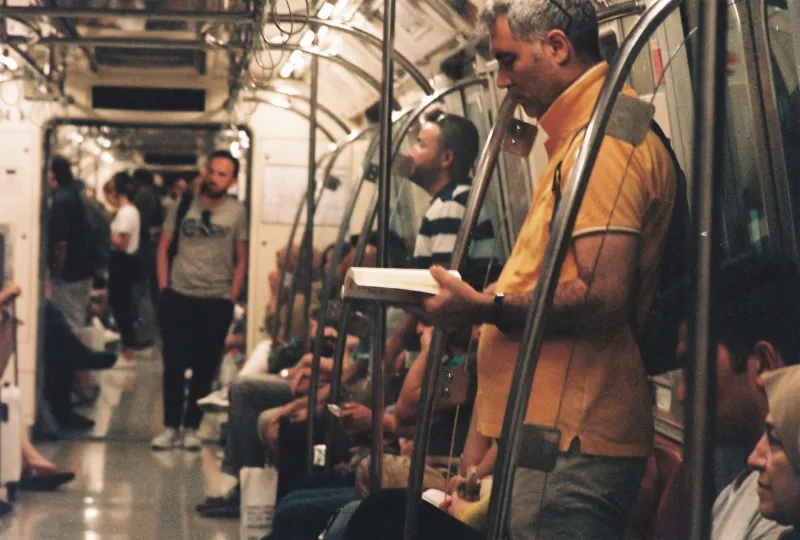
Photo by Photo by Pierre Bamin on Unsplash on Unsplash
The Case for Owning the Same Book Twice
There's a paperback on my shelf that has been to four states and three apartments that aren't mine. I've bought it five times. Not because I'm careless — because I keep handing it to people, and I've made peace with the idea that this particular book has a life outside my house.
That's the two-copy rule: for a handful of titles, you keep a lending copy on purpose. Not a pristine edition. Not a first printing. A cheap, replaceable, slightly battered copy that exists to leave.
It sounds small. It changes the texture of your reading life more than it should.
This Is Not a Collection
The instinct to hoard is strong in book people, so let's draw the line clearly. A lending shelf is not a collector's shelf. It has a job. Its success is measured in gaps.
You are not building an archive. You are building a small, rotating distribution network with your name on it, and the goal is for the shelf to look picked over by the end of the year.
Which Books Earn a Duplicate
Not everything deserves a second copy. Here's how I decide:
- The book you've already pressed on three people. If you've bought it as a gift more than once, just own two.
- The short one. Under 250 pages. A loan to a reluctant reader needs a low barrier to entry.
- The argument-starter. The novel two people can finish and then disagree about for forty minutes. Ran Carr's work tends to sit in this zone — the books where the ending is a debate waiting to happen.
- The replaceable paperback. Under twenty dollars, in print, easy to reorder. Never lend anything you'd grieve.
- The rereadable. If losing it costs you nothing because you've already gotten what you needed, that's your lending copy talking.
And the hard no's: signed copies, out-of-print editions, anything with your dead grandmother's handwriting in it, and library books. Especially library books. Do not lend library books to friends. That's not generosity, that's a three-way problem.
Lending Etiquette, Spelled Out
Most book-loan disasters aren't caused by bad friends. They're caused by unspoken terms. Say the terms out loud, even if it feels fussy:
“No deadline — but I'd like it back by summer.” Or: “Honestly, consider it a gift.” Both are fine. What isn't fine is the silent version, where you both pretend there's no expectation and then quietly resent each other for eight months.
A few more rules worth adopting. Lend one book at a time to any given person — a stack becomes a fog. Write your name inside the cover in pencil, small, so it stops being a mystery object. And never hand over a book as a test of the friendship. It's a book. It's not a loyalty audit.
Tracking Loans Without Becoming a Librarian
The moment you build a spreadsheet with columns, you've turned a pleasure into a second job. Don't.
Use one index card tucked in a drawer, or a single note on your phone, or a group chat where you post a photo of the person holding the book. That last one is my favorite, because it's evidence, it's charming, and it starts a conversation later when the book resurfaces.
One rule keeps everything tidy: if it's not on the shelf, it's on the list. One shelf, one list, no separate system. The moment you need to remember where a book went without checking, the system has already failed.
When It Doesn't Come Back
Decide in advance how you'll feel about this, because it's going to happen. A book moves to a new apartment. A book gets loaned onward to a cousin. A book gets left in a beach rental in Delaware and becomes part of someone else's summer.
Grieve for about nine seconds and then reframe: the loan worked. The book did its job. Somewhere, someone is reading a page that used to be yours.
And if it comes back annotated — margins, flags, a coffee ring on chapter nine — that's not damage. That's a conversation you can now have in person.
The Point of an Empty Shelf
A lending shelf turns reading into something you do with other people, which is most of the reason any of us do it at all. It gives you a reason to text someone about a book instead of just thinking about it. It gives your book club a lending pipeline. It gives you a small, satisfying excuse to walk into an indie shop on a Saturday and buy the same novel for the sixth time.
Stock it thin. Keep it cheap. Let it empty out.